

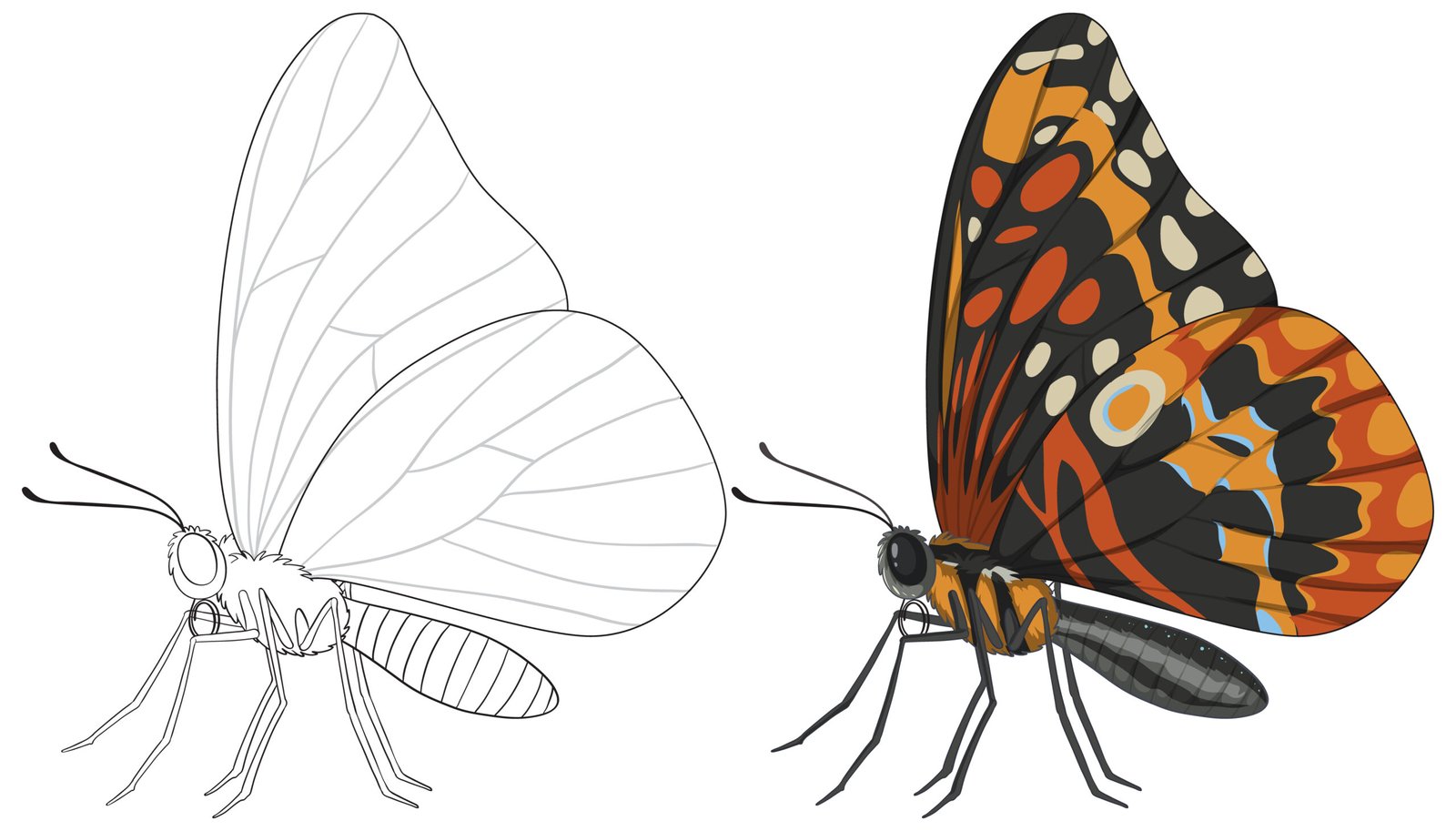
The wings of butterflies are complicated biological structures which are made up of thin membranes and are held at a network of veins. Their surface is adorned with microscopic scales which result in the coloration of their surface by pigment and structural reflection.
This is because the colors which are formed in the pigment are due to the presence of chemical compounds which absorb certain wavelengths of light. Structural coloration on the other hand is caused by microscopic ridges which refract and scatter light giving a sense of iridescent effects. A famous example of structural blue color is the Blue Morpho.
Wing patterns can be used in several survival purposes such as camouflage, predator deterrence, and mating communication. Other species have eye spots that resemble larger animals and so they deter predation. Other species are well camouflaged into either bark or leaf litter.
The wing structure is symmetric indicating genetic regulation and stability of development. Even small differences in patterns are capable of affecting mating choice and evolution. Wing scale injury generally does not impair flight especially when it is associated with decreased thermal efficiency or visual signaling.
CELLPHONEGAMES.COM provides the scientific complexity of the wing structure of butterflies as the convergence of biology, physics, and the evolutionary design.